



2026 Steel Structure Industry Usher in New Opportunities for High-Quality Development Driven by Policy Dividends and Technological Innovation
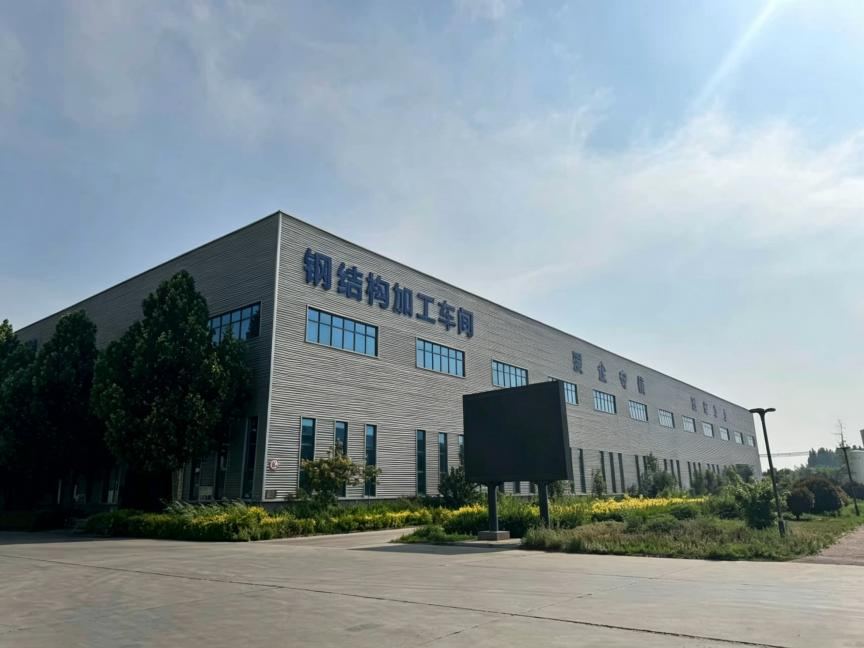
As the opening year of the 15th Five-Year Plan period, 2026 witnesses the steel structure industry in China stepping into a fast track of high-quality development, driven by policy dividends, green transformation and intelligent upgrading. The latest industry data shows that the market scale of China’s steel structure industry is expected to exceed 1.28 trillion RMB in 2026, with a year-on-year growth of 12.5%, significantly higher than the average growth rate of the construction industry, demonstrating strong market resilience and development potential.
National policies continue to offer strong support for the industry’s development. The 15th Five-Year Plan clearly proposes to raise the proportion target of prefabricated buildings to more than 30%, and the 2026 revised Evaluation Standard for Prefabricated Buildings raises the minimum assembly rate from 50% to 65%. Most importantly, steel structures have been upgraded from an optional choice to the default structural form for government-invested projects. This milestone policy change has established the core position of steel structures in the fields of building industrialization and green construction.
On the demand side, the industry is undergoing structural reform. While the traditional real estate sector is adjusting, three new tracks including infrastructure construction, new energy and high-end manufacturing have become the major growth drivers. National key strategic projects and major engineering constructions continue to advance, bringing broad market space for steel structures in transportation hubs, logistics warehouses, urban renewal and other infrastructure projects. Meanwhile, with the in-depth advancement of the dual-carbon goals, the demand for steel structures for new energy equipment such as wind power, photovoltaic and energy storage has surged, becoming a new blue ocean for the industry. In addition, high-cleanliness and large-span steel structure factories serving new productive forces such as low-altitude economy and quantum technology have also become rigid market demands.
In terms of technology, intelligent and green development have become the main themes of industrial transformation and upgrading. Intelligent construction technologies such as BIM, digital twin and AI production scheduling are widely applied, greatly improving production efficiency and engineering accuracy. Statistics show that the proportion of projects adopting BIM technology has exceeded 40%. In the field of green and low-carbon development, recycled steel, building integrated photovoltaic (BIPV) and full-life-cycle carbon management systems are rapidly popularized, helping domestic enterprises actively respond to international carbon tariff challenges.
Looking ahead, industrial concentration will be further improved, and leading enterprises will accelerate industrial integration relying on their advantages in technology, production capacity and capital. As a professional and refined enterprise in the industry,Shandong Huacang Steel Structure occupies a unique position in the segmented market by virtue of its core advantages in non-standard customization, precision processing and quality control. In 2026, China’s steel structure industry is transforming from scale expansion to quality and efficiency improvement, making continuous contributions to serving national strategies and promoting construction innovation.
Navigation
Send Us A Message
Specialized field of steel wire ropes
24/7 before-sales and after-sales services
Comprehensive technical support